India–Canada Seal $2.6 Billion Uranium Deal, Signal Strategic Reset in Bilateral Ties
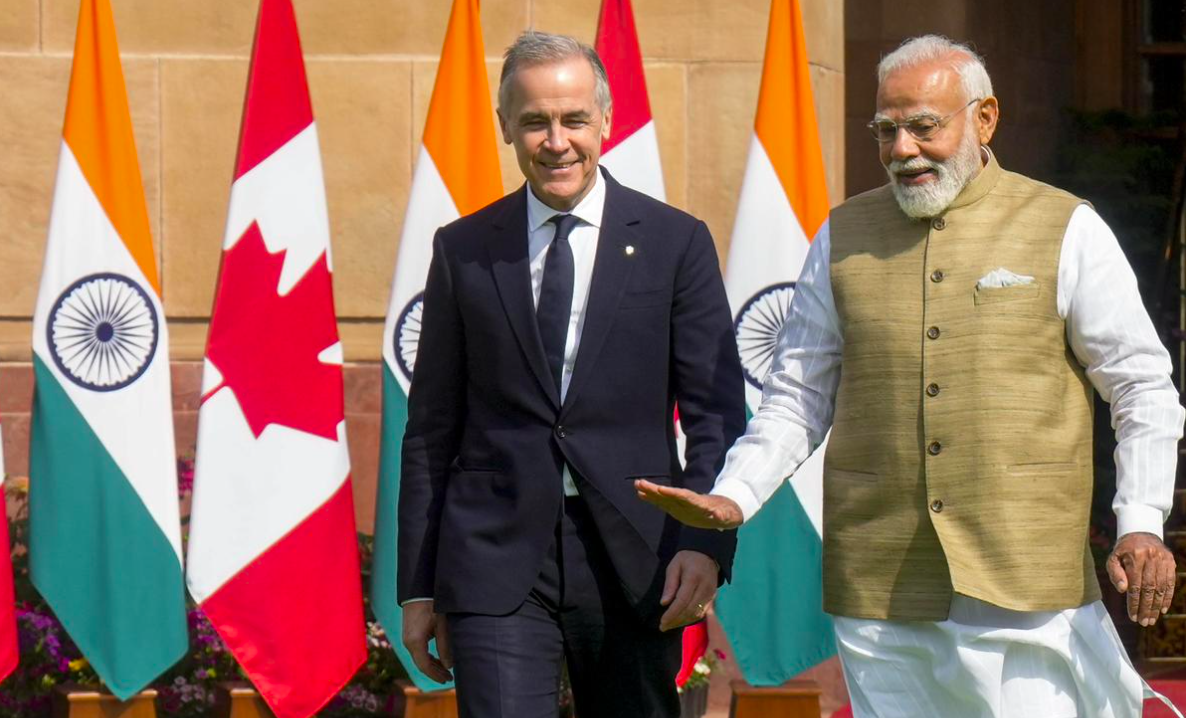
India and Canada have taken a decisive step toward rebuilding and strengthening their relationship with the signing of a landmark $2.6 billion uranium supply agreement. The deal, signed with Cameco, is set to play a crucial role in supporting India’s long-term civil nuclear energy ambitions and marks one of the most significant outcomes of the renewed diplomatic engagement between the two nations.
The agreement will ensure a stable supply of uranium to India, reinforcing its clean energy transition and expanding collaboration on next-generation nuclear technologies, including small modular reactors (SMRs) and advanced reactor systems. As India looks to balance its growing energy needs with climate commitments, nuclear power is increasingly seen as a reliable, low-carbon solution in the country’s long-term energy mix.

The deal was announced during Canadian Prime Minister Mark Carney’s four-day visit to India, where he held high-level discussions with Prime Minister Narendra Modi. Beyond nuclear cooperation, both leaders reaffirmed their intent to conclude a long-pending free trade agreement by the end of 2026. This renewed momentum comes after bilateral relations faced a sharp downturn in 2023, resulting in diplomatic expulsions and stalled trade negotiations.
Currently, bilateral trade between Canada and India stands at nearly $9 billion for FY 2024–25. Under a proposed Comprehensive Economic Partnership Agreement (CEPA), both governments are targeting an ambitious expansion of trade flows to $50 billion by 2030. Officials on both sides see significant untapped potential across sectors such as clean energy, critical minerals, technology, agri-products, education, and defence manufacturing.

Carney’s visit is being widely viewed as a diplomatic reset, reflecting a shared strategic need to diversify economic and geopolitical partnerships amid global uncertainty. With both India and Canada seeking to reduce overdependence on the United States, the renewed focus on bilateral cooperation aligns with broader efforts to build resilient, multipolar trade and energy networks.
The uranium agreement also signals deeper trust and long-term commitment. Canada is one of the world’s largest uranium producers, while India represents one of the fastest-growing energy markets globally. By aligning on civil nuclear cooperation and advanced reactor technologies, the two countries are laying the groundwork for sustained collaboration in clean energy innovation.
Overall, the $2.6 billion uranium deal goes beyond energy supply; it represents a clear political and economic statement. India and Canada are turning the page on past tensions and charting a forward-looking partnership focused on trade growth, clean energy, and strategic cooperation for the next decade.













Post Comment